It is such a relief when you finally figure things out. In my first few months of gardening, I could not understand why my greens were not doing as well as the ones featured by some North American youtubers.
 |
| Although the eggplant was always very productive, my harvests are suddenly significantly more abundant. |
However, suddenly, I started to enjoy my neighbour's complements and envy over my lush and forest-like
leafy salad green garden in the wetter, latter months of the year. While my learning curve (regarding soil composition, fertilizing, mulching, companion planting and so) contributed to my later success,
planting according to seasons seems to have been a huge factor.
-- My planting season experiences in a tropical organic garden --
Located midway up the 'Northern Tropic' (aka the Tropic of Cancer), my tropical organic garden experiences 2 seasons within the year.
Officially, they are as follows. However, I find that I can follow this with a few weeks, even months of tolerance in the case of some plants.
- Dry season: roughly from start of January to end June
- Wet season: roughly from start of July to end December (to coincide with the hurricane season)
Leafy greens generally do not do well in the dry season in the hot tropics. This appears to be the case even when I try to beat the dry season by putting greens on a patio that gets intense light only in the morning. Regarding the tolerance when considering the months, I have found that my greens started to slow down in production from around February. The problems became intolerable around late June when I started to uproot the unhealthier plants.
 |
| This image on 18 June 2012 was taken about 1 week after seeing exactly the same thing on my small brocoli plant before it died. My otherwise extremely productive pak choy was being taken over by caterpillars that my endless efforts could not control. BTW, what are the pests in this image? |
-->
This image of kale is a case in point. It had been so lush some months ago. Suddenly, its heat-related stress appears to be attracting pests. Other plants that suffered this way were:
- Arugula (still producing but suddenly always covered with voracious caterpillars)
- Pak Choy
- Lettuce (just never developed lovely fulll and tender leaves. No more wide varieties of gourmet lettuces for breakfast.)
- Broccoli (before drying out to a crisp, my broccoli suffered the same fate as the photographed kale above)
- Kangkong (the plant is being aggressively attacked by white flies. They are still producing leaves. However, the patio plants are doing considerably better than the ones outside.)
- Basil (is still edible but the flowers have already dried and seeding so the leaves are not as plump as previously)
- Strawberries (the plants are still spreading but they are no longer flowering. The leaves look generally smaller and less verdant than they had been some months ago)
-- How to still eat lots of greens during the dry season --
I figured a great way of having greens even during the dry season.
Kangkong (the plant is being aggressively attacked by white flies. They are still producing leaves. However, the patio plants are doing considerably better than the ones outside. I apply a lot of my
homemade garlic spray to maintain the plant.)
- Sweet potato (I grow sweet potatos not for the root but the nutrtious leaves)
- Moringa (See how to successfully grow moringa oleifera from seed. Moringa is drought tolerant. Consequently, I know that I could always use the leaves during the dry season as a fantastic source of greens).
==> BUY TROPICAL SEEDS <==
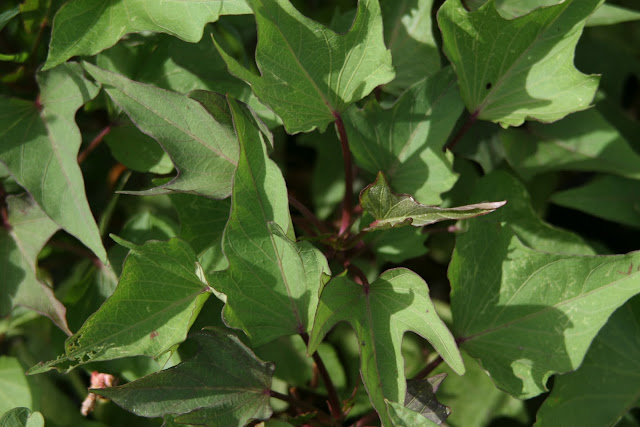 |
| Sweet potato high on nitrogen to promote leaf growth (over potato growth). My sweet potato grows in a pot. Photo taken 1 April. The plant still looks healthy in mid June 2012 and shows no sign of dying. |
-- Happy plants despite the dry season --
Over the last month or so, I have enjoyed an abundance of these peppers to the point of seeking people to whom I could give away peppers. The plant in the photo below was pulled up from its very shaded location. It was growing against a lemongrass plant that towered about 2.5 foot over it. Perhaps these peppers like some shade.
|
|
| Almost 1.5 feet tall, this pepper plant was laden with 14 peppers. It is wet after I sprayed it with my homemade garlic spray. |
Other very happy plants include
eggplants and
tomatoes. They are overladen right now. My single
dwarf pommecythere tree has 30 immature fruits and my
cape gooseberry has its first set of flowers. My
dwarf pommegranate of a few months is suddenly fruiting abundantly.
 |
| Roughly one-foot dwarf pommegranate laden with many fruits. BTW, the fruits are edible but said to be less delicious when compared with the fruit from the larger varieties. |
.
 |
| Flower on my Cape Gooseberry (aka incan or poha berry) plant on 18 June 2012 |
-->
 |
| Pommecythere growing in recycled wooden barrel on 4 June 2012 |
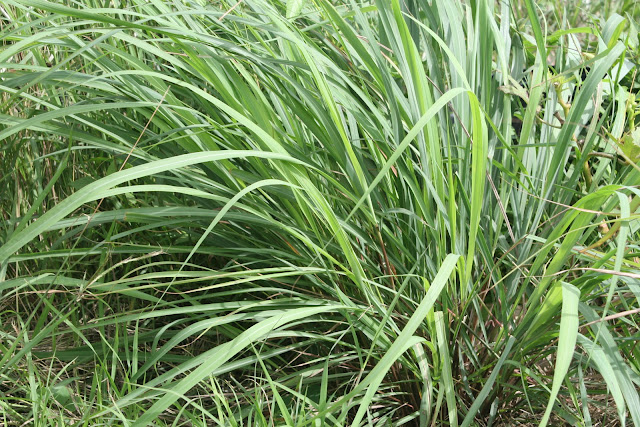 |
| Lemon grass planted directly into the ground 7 May 2012 |
Your suggestions and comments are welcome.


